Why Forgotten Childhood Games Matter for Your Child’s Brain and Emotional Health
Remember coming home from school, dropping your bag on the bed, and running back outside until someone called you in for dinner?
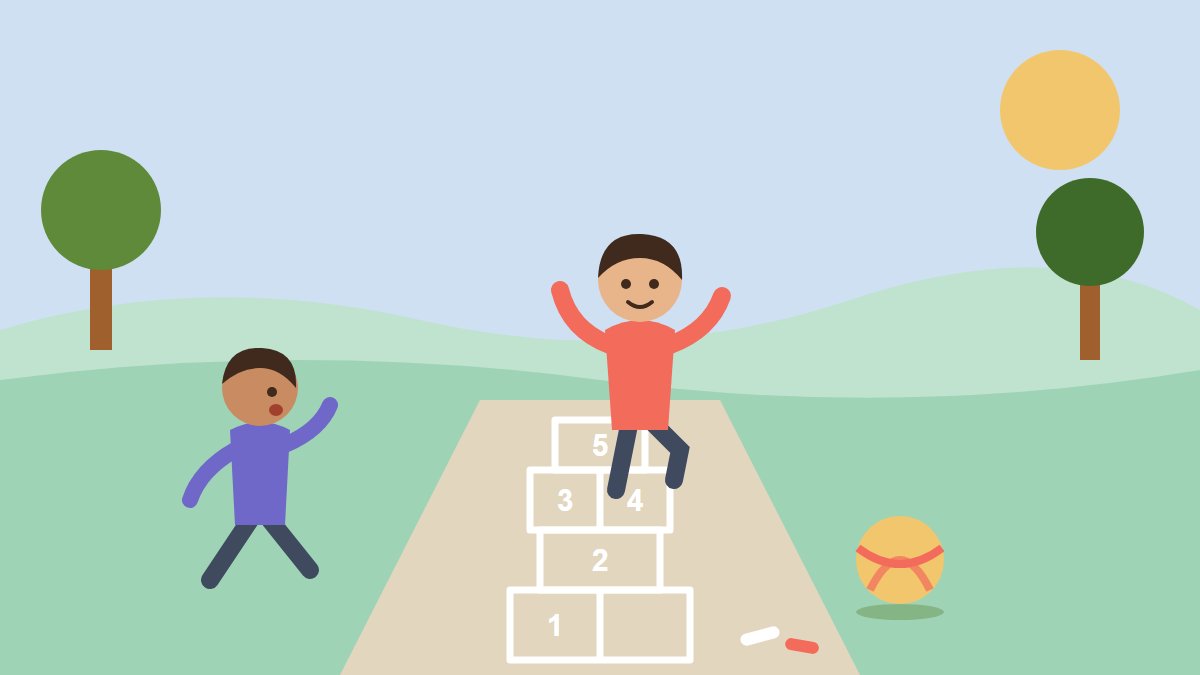
Chalking out a hopscotch grid on the driveway. Shouting “Stop!” mid-sprint during a game of Country-Country. Testing your reflexes in Kho Kho or dodgeball. Holding your breath during a tense round of Statue or Simon Says. These games weren’t just something to pass the time they were the actual rhythm of childhood.
Walk through neighborhoods in Islamabad or Rawalpindi today, and those chalk marks on the pavement have mostly disappeared. Tablets, phones, and structured indoor activities have taken their place. Technology has plenty to offer, sure but the quiet decline of outdoor physical play has left a real gap in how kids develop.
From a child psychology standpoint, these “simple” games were never just entertainment. They were doing serious work building cognitive skills, emotional regulation, and psychological resilience, all disguised as fun.
The Cognitive Benefits Hiding Inside Classic Games
A big part of child development comes down to executive function the mental toolkit that lets us plan, focus, remember instructions, and juggle more than one thing at a time.
- Executive function and working memory. Games like Simon Says and Statue are basically cognitive control training in disguise. Simon Says teaches conditional logic and active listening a child has to evaluate in real time whether an instruction is actually valid before reacting. Statue trains rapid cognitive flexibility, forcing the brain to switch instantly from full motion to total stillness.
- Spatial awareness and motor planning. Hopscotch demands real spatial judgment. A child has to calculate distance, control their muscle force, balance on one foot, and mentally track a grid all at once. That link between visual movement and physical control is exactly what builds the neural pathways behind spatial reasoning and later problem-solving.
Building Emotional Resilience and Impulse Control
Emotional maturity doesn’t come from a book. It gets built through real, in-the-moment social and physical interaction.
- Practicing impulse control. In Country-Country, a child feels that sudden rush of adrenaline the moment their assigned country gets called and then has to freeze completely the instant the caller shouts “Stop!” That abrupt switch forces the nervous system to practice self-soothing and impulse inhibition, skills that carry directly into how a child manages frustration and anxiety off the field too.
- Learning to cope with losing. In dodgeball or Kho Kho, getting tagged out is just part of the game. It teaches kids how to sit with mild disappointment, handle temporary exclusion, and jump back in without spiraling. That low-stakes practice builds real emotional grit the kind that protects kids from becoming oversensitive or easily frustrated as they get older.
Social Skills That Only Come from Real Interaction
Online multiplayer games do offer a kind of connection, but they can’t replicate the non-verbal cues and physical presence that full social-emotional development actually needs.
- Teamwork and strategy. Kho Kho demands fast communication, trust between teammates, and reading each other without words.
- Fairness and negotiation. Traditional games rarely come with a referee. Kids have to work out arguments, enforce fair play, and set boundaries themselves a core piece of social intelligence that doesn’t get much practice anywhere else.
Why Screens Don’t Quite Fill the Gap
A lot of parents in Islamabad and Rawalpindi worry about screen time but aren’t sure what to actually replace it with. Digital entertainment delivers quick dopamine hits without asking for physical effort or social give-and-take. Over time, that passive engagement can contribute to shorter attention spans, more reactive emotions, and a harder time sitting still in a classroom.
Bringing traditional games back gives kids a genuine outlet a way to burn off pent-up energy, bring cortisol down, and reset emotionally.
Bringing Classic Games Back Home
You don’t need a big setup or any special equipment to give your child these benefits:
- Start small. Chalk out a hopscotch grid on the patio or driveway.
- Make it a family thing. Fifteen minutes of Simon Says or Statue on a rainy afternoon or a warm evening goes a long way.
- Get the group involved. Coordinate with neighbors or relatives to organize Kho Kho or dodgeball during weekend get-togethers.
If your child struggles with focus, emotional regulation, or fitting in socially, play-based strategies can often become a real part of their broader therapeutic support.
Frequently Asked Questions
Why are traditional outdoor games better than educational screen games?
Educational apps can teach academic concepts, but they can’t replicate the sensory-motor integration, physical balance, real-time stress regulation, and face-to-face negotiation that traditional outdoor play naturally provides.
How does a game like Hopscotch help with academic learning?
Hopscotch builds motor planning, spatial awareness, and sequence tracking skills that translate directly into reading comprehension, spatial math, and physical coordination in the classroom.
At what age should kids start playing structured, rules-based games?
Basic versions of games like Simon Says or Hopscotch work well from around ages 3 to 4. As working memory and emotional regulation develop, kids can move into more complex games like Kho Kho or Country-Country around ages 6 to 8.
If you’re concerned about your child’s cognitive development, social confidence, or emotional well-being, Pehchaan Clinic offers specialized child psychology and hypnotherapy services in Islamabad and Rawalpindi. Reach out to our clinical team to schedule a comprehensive assessment, or read more about child psychology at Pehchaan Clinic.
Clinically reviewed by Tahreem Hameed, Speech and Language pathologist at Pehchaan Clinic.
Need professional guidance for yourself or your child?
Book an Appointment