Speech Milestones in Children: What’s Normal and When to Get Help
Every parent waits for that first word like it’s a headline event. Maybe it’s a soft “mama,” a babbled “dada,” or one day your toddler just starts stringing full sentences together out of nowhere. Watching a child find their voice is genuinely one of the best parts of raising them.
But it’s also completely natural to wonder if your child is keeping pace. Parents compare their little one to an older sibling, a cousin, a friend’s kid at daycare, and start wondering: is this just how my child talks, or is something actually behind schedule?
Knowing what typical speech development looks like and which signs are worth paying attention to can take a lot of that guesswork off your plate.
Typical Speech and Language Milestones
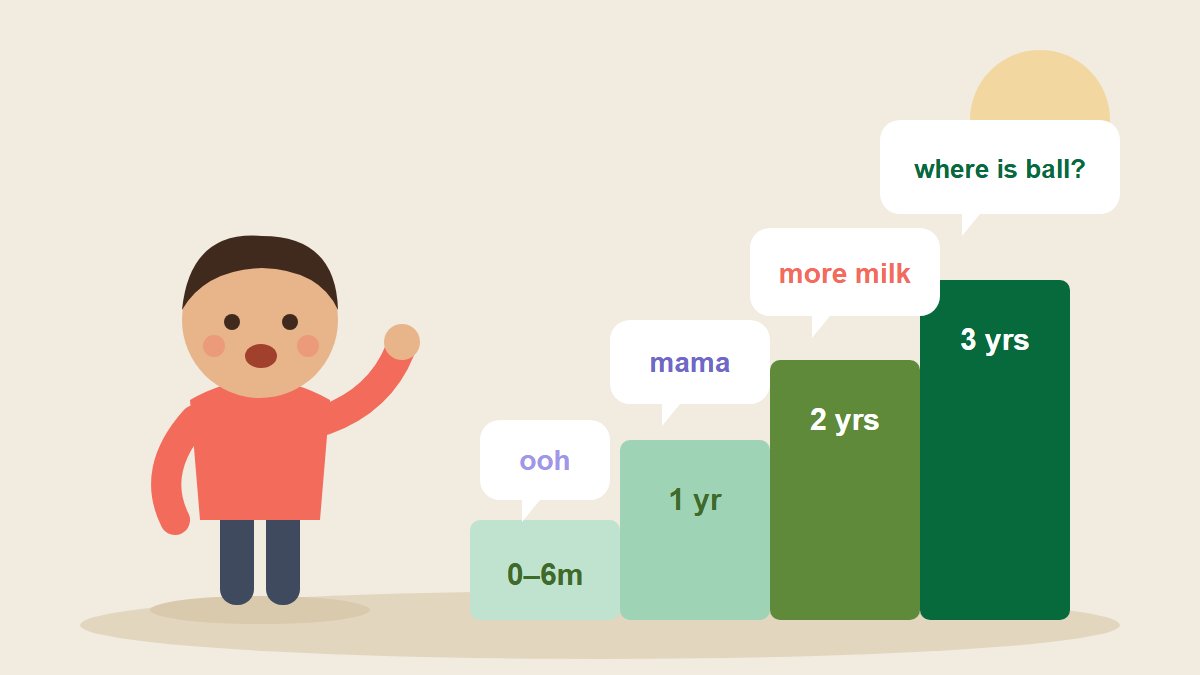
Kids build communication skills in stages, and while every child has their own pace, these age ranges give you a general sense of what to expect.
0 to 6 months — sound exploration
- Responds to voices and turns toward sound
- Coos with sounds like ah, oh, oo
- Laughs and uses vocal sounds to express pleasure or distress
7 to 12 months — babbling with intention
- Babbles sound combinations like ba-ba, ma-ma, da-da
- Uses gestures — waving bye-bye, reaching to be picked up
- Responds to their name and simple words like “no”
- Says their first meaningful word around 12 months
12 to 18 months — building words
- Uses 5 to 20 functional words
- Points to objects or pictures to show what they want
- Imitates words and sounds from conversation
- Follows simple one-step directions, like “come here”
18 to 24 months — combining words
- Uses at least 50 individual words
- Starts joining two words together “more milk,” “big dog”
- Identifies common objects, body parts, and family members
- Is understood roughly half the time by unfamiliar listeners
2 to 3 years — building sentences
- Uses short sentences of three or more words
- Asks simple questions like “Where is ball?”
- Follows two-step requests, like “pick up the toy and put it on the table”
- Is understood by family members most of the time
Red Flags Worth Paying Attention To
Some variation is completely normal but a few signs are worth flagging for a professional evaluation.
Before 18 months:
- No eye contact or response to their name by 9 months
- No babbling or gestures like pointing and waving by 12 months
- No reaction to loud sounds or spoken words
- No attempt to communicate needs or imitate sounds by 15 months
Between 18 and 36 months:
- Fewer than 15 to 20 words by 18 months
- Relying entirely on gestures instead of attempting speech by age 2
- Can’t combine two words independently by age 2
- Trouble understanding simple spoken instructions
- Struggles to imitate speech sounds, or loses speech skills they’d already picked up
- Speech is still very unclear to family members after age 3
When It’s Time to See a Specialist
If any of this sounds familiar, acting early really does make a difference speech delays tend to respond much better to intervention during a child’s critical developmental years.
And to be clear, seeking help doesn’t mean something is permanently wrong. Speech delays are often tied to mild hearing issues, limited chances to communicate, or developmental variations all of which typically respond well to guided speech therapy and the right support at home.
If you’re in Islamabad or Rawalpindi, Pehchaan Clinic offers a thorough developmental evaluation for exactly this kind of concern. Our team provides compassionate speech and psychological assessments built around your child.
To talk it through with our team, book a consultation, or read more about speech therapy at Pehchaan Clinic.
Frequently Asked Questions
What’s the difference between a speech delay and a language delay?
Speech is about physically producing sounds and words. Language is about understanding and using words to communicate meaning. A child with a speech delay might have ideas they’re trying to express but struggle with pronunciation, while a child with a language delay might pronounce words clearly but struggle to form sentences or understand questions.
Can hearing issues cause speech delays?
Yes. Undetected hearing loss or frequent ear infections make it harder for a child to hear speech clearly, which directly affects their ability to imitate sounds and pick up language. A hearing test is usually one of the first steps when evaluating a possible delay.
When should I see a speech specialist in Islamabad or Rawalpindi?
If your child isn’t babbling by 12 months, has fewer than 20 words by 18 months, or is struggling to form two-word phrases by age 2, it’s worth booking a consult. Pehchaan Clinic offers professional guidance and assessment for families across Islamabad and Rawalpindi.
Clinically reviewed by Tahreem Hameed, Speech and Language pathologist at Pehchaan Clinic.
Need professional guidance for yourself or your child?
Book an Appointment