Beyond the Couch: Four Myths About Therapy We Need to Retire
Lately you might have caught yourself thinking about talking to a professional. Then, almost on cue, a voice pipes up maybe your own, maybe something a relative once said at a family gathering.
"Do I really need therapy? Am I doing badly enough to justify it? What would people say?"
Here in Pakistan, nobody blinks when we book a doctor's appointment for a fever or a bad cough. But when the weight is in our head rather than our chest, the usual advice is to "stay strong," keep busy, or stop overthinking. Over time, that attitude has piled up a whole set of myths around psychotherapy myths that leave a lot of people quietly struggling instead of getting the help they deserve.
At Pehchaan Clinic, we hear these worries almost every day. So let's sit down and work through four of the most persistent misconceptions about therapy, one at a time.
Myth 1: Therapy is only for people in crisis.
The truth: you don't need to be falling apart to sit down with a therapist.
It helps to think of therapy less as an emergency room and more as regular maintenance for your mind. It's for the parent who feels quietly disconnected from everyone around her. It's for the employee stretched thin between deadlines and home life. It's for someone who freezes before public speaking, or who simply can't figure out why they feel stuck. Support doesn't have to wait until things become unmanageable that's usually the point where it becomes harder, not easier, to reach out.
Myth 2: Strong faith or a close family means you shouldn't need it.
The truth: faith and family are real sources of strength, but they aren't a substitute for professional care they work alongside it.
Going to therapy isn't a verdict on your beliefs, and it isn't proof that your family let you down. If you broke your arm, you'd still pray for a smooth recovery, but you'd also get an X-ray and a cast from an orthopedist. Mental health works the same way. A therapist offers a structured, evidence-based process that sits comfortably alongside whatever else already grounds you.
Myth 3: A therapist might judge me, or worse, talk to my family.
The truth: this fear is common, and it's also unfounded. Confidentiality isn't a courtesy in therapy, it's the foundation the whole profession is built on.
Walk into a session at Pehchaan Clinic and you leave the outside world's expectations at the door. A therapist's job is to listen without passing judgment, not to tell you how to live. What you say in that room is protected, both ethically and, in most cases, legally. It stays between the two of you.
Myth 4: Why pay a therapist when I can vent to a friend for free?
The truth: a good friend is a gift, but a conversation with one isn't the same thing as therapy.
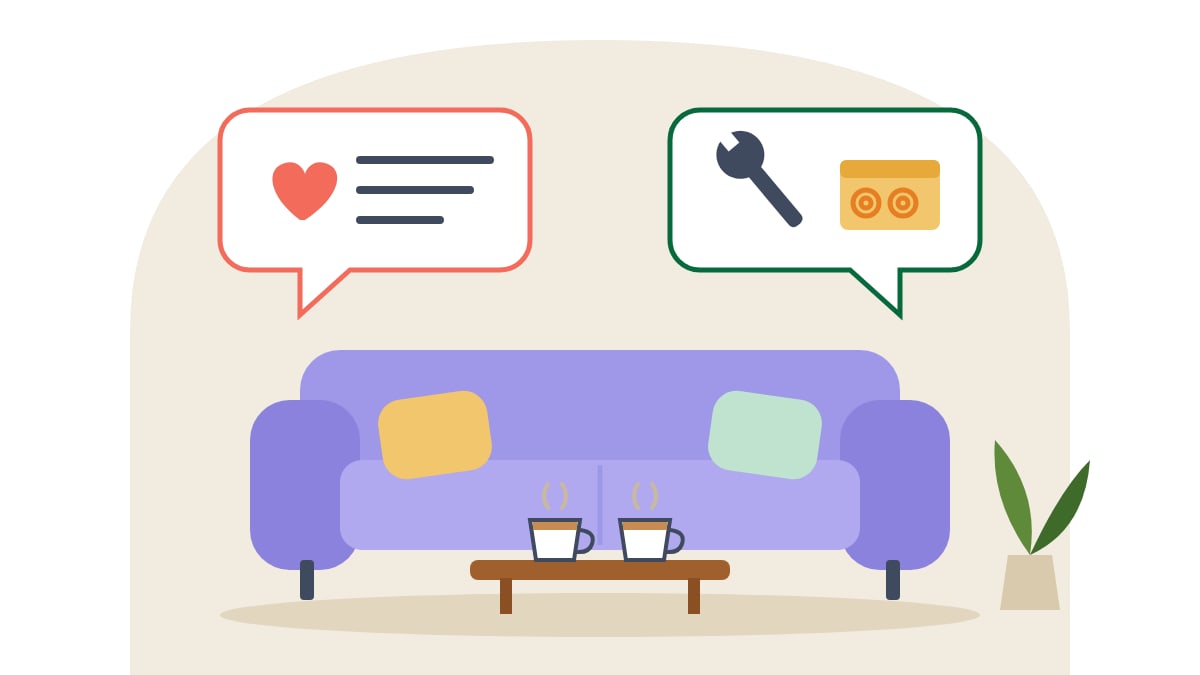
Talking to a friend is a two-way exchange, you carry some of their weight, they carry some of yours, and the advice on either side comes from personal experience rather than training. A therapist, by contrast, is entirely focused on you. Instead of just listening, they draw on evidence-based methods, things like restructuring unhelpful thought patterns to help you build tools you can keep using long after the session ends.
Reaching Out Is Its Own Kind of Strength
Asking for help isn't a weakness admitting you can't hold everything up on your own is one of the harder, braver things a person can do. It's also how the cycle of silent struggling finally breaks.
Pehchaan Clinic exists to be a warm, judgment-free space right here in the community, for anyone dealing with burnout, parenting stress, anxiety, or anything in between. You don't have to untangle it by yourself.
Let's take a breath and work through it together. Reach out to Pehchaan Clinic for a completely private, confidential consultation because your peace of mind matters just as much as anything else on your plate.
Need professional guidance for yourself or your child?
Book an Appointment