Understanding the Non-Linear Stages of Grief: How Loss Reshapes Mind and Body
Key Takeaways
- Grief doesn’t move in a straight line, it waxes, wanes, and loops back on itself unpredictably.
- It shows up in the body too, causing fatigue, digestive issues, a weakened immune system, and mental fog.
- Grieving inside close-knit family structures carries its own emotional and social complexities.
- Approaches like Cognitive Behavioral Therapy (CBT) and hypnotherapy can help calm a dysregulated nervous system.
We’re often told grief moves through neat, sequential steps — denial, anger, bargaining, depression, acceptance like checkpoints on a map.
In reality, it almost never works that way.
You might wake up one morning feeling steady, fully at peace with what’s happened, only to be knocked sideways that same evening by a familiar perfume, a dish cooking on the stove, or nothing more than a quiet room. Grief is unpredictable and deeply personal. It doesn’t just reshape how you feel it changes your body and brain chemistry too.
The Myth of the Straight Line
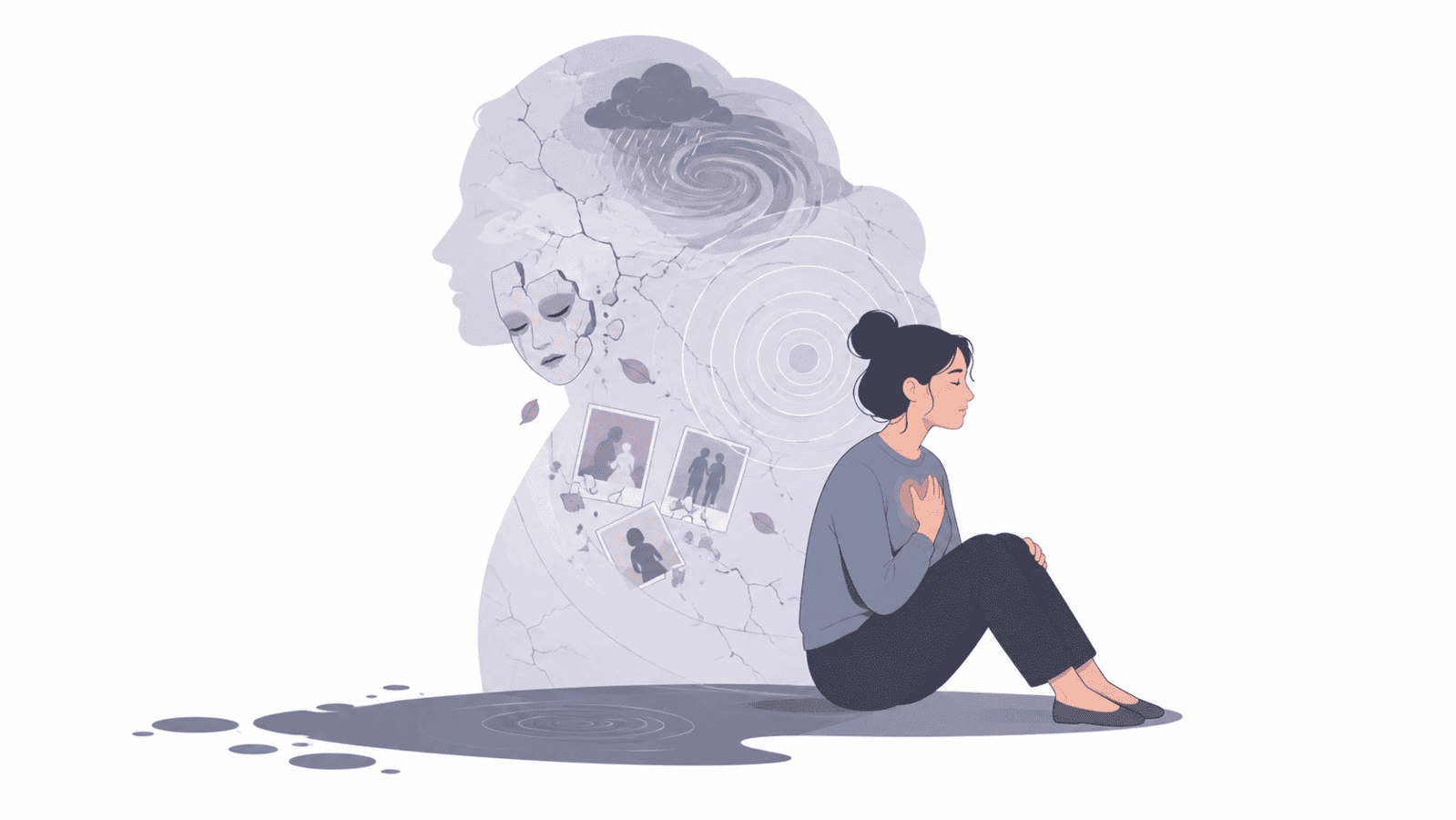
The grief model most people know introduced by Elisabeth Kübler-Ross was never meant to be a step-by-step manual. It’s closer to a spiral than a staircase. You can move between emotional states fluidly, feel several things at once, or find yourself back in an emotion you thought you’d already moved past, months or even years later.
Shock and numbness. In the beginning, the mind acts almost like a shield. You go through the motions handling calls, arrangements, obligations without fully absorbing what’s happened. This numbness isn’t avoidance; it’s what gets you through the first days.
Pain and guilt. As the numbness fades, real emotional pain moves in, often dragging guilt along with it. You might replay old conversations, wondering if there was something you could have said or done differently.
Anger and bargaining. Anger in grief is frequently pain wearing a different face directed at family, at doctors, at yourself, or at something larger. Bargaining is the mind’s attempt to negotiate its way out of a reality it isn’t ready to accept.
Withdrawal and deep sadness. This stage tends to be quiet and isolating. You may pull away from people, lose motivation, and feel a heaviness settle in as the permanence of the loss becomes real.
Reorganization and acceptance. Acceptance doesn’t mean the pain is gone or that you’re “over it.” It means you’re learning to build a life that holds this loss alongside everything else.
How Grief Affects the Mind and Body
Your brain doesn’t file loss away as just an emotional event, it registers it as a genuine physical threat.
Perceived loss
↓
Amygdala activation (the brain’s threat system)
Mind / brain
- Brain fog
- Impaired focus
- High vigilance
- Sleep disturbances
Physical body
- Cortisol & adrenaline surge
- Weakened immune response
- Digestive distress
- Chest tightness & fatigue
On the mind. Neuroimaging shows grief activates the anterior cingulate cortex the same region that registers physical pain. Meanwhile, the prefrontal cortex, responsible for planning and focus, slows down considerably. That combination is what produces the brain fog, memory lapses, and difficulty making even small decisions that so many grieving people describe. On top of that, the amygdala your brain’s alarm system stays on high alert, keeping the mind racing and fueling anxiety, restlessness, and insomnia.
On the body. Prolonged grief has been shown to raise inflammation and lower T-cell activity, leaving the body more vulnerable to illness. The gut-brain connection means grief often shows up as appetite loss, nausea, or stomach cramps. In more severe cases, the surge of stress hormones can even trigger stress-induced cardiomyopathy sometimes called “broken heart syndrome.” And grief carries physical weight in gentler ways too: tight muscles, back pain, migraines, and an exhaustion that sleep alone doesn’t fix.
What Non-Linear Grief Looks Like in Real Life?
Picture a widow living in a busy household in Rawalpindi. In the first months after her husband’s passing, the steady stream of extended family and neighbors provides real comfort. But once the visitors thin out and daily life resumes its normal rhythm, the grief hits differently.
She might move through her day calmly, managing the household, and then be pulled under by a sudden wave of sadness while folding laundry that evening. A phrase on the radio, the sight of her husband’s favorite teacup small, unplanned triggers can pull her right back into acute grief, even months into her recovery.
This back-and-forth isn’t a setback or a sign she isn’t coping. It’s simply how the brain processes a loss this significant.
Research on bereavement backs this up. People naturally move between loss-oriented processing sitting with sadness, memory, and longing and restoration-oriented processing handling daily tasks, building new routines, focusing on what’s ahead. Healing isn’t about staying permanently in restoration mode. It’s about becoming more comfortable moving between the two, without judging yourself for either.
Finding Balance While Grieving
Healing isn’t about moving past grief, it’s about growing your capacity to carry it. A few grounded ways to support yourself through the process:
- Practice somatic grounding. When anxiety or panic flares, try slow belly breathing or place a hand on your chest to signal safety to your nervous system.
- Let go of the timeline. There’s no deadline on grief. Let sadness, anger, or even sudden moments of joy exist without guilt.
- Keep routines simple. Focus on gentle movement, staying hydrated, eating something nourishing, and getting rest.
- Reach out for professional support when grief starts to feel unmanageable, it can help you process what you’re carrying and ease physical symptoms along the way.
At Pehchaan Clinic, we offer empathetic, evidence-based psychological support built around your specific experience. Cognitive Behavioral Therapy can help reframe intrusive thoughts, while clinical hypnotherapy can calm an overactive fight-or-flight response, bringing a sense of steadiness back to both mind and body.
Book a confidential consultation with our team, or read more about counseling for anxiety and panic disorders if grief has left your nervous system on edge.
Frequently Asked Questions
Why does grief feel like physical pain?
Grief activates the anterior cingulate cortex, the same brain network that registers physical pain. Your nervous system reads profound emotional loss as a genuine threat, which is why it can produce real muscle tension, chest tightness, and bodily discomfort.
How long does the non-linear stage of grief last?
There’s no fixed timeline. Acute physical and emotional symptoms often ease over the first six to twelve months, but non-linear waves of grief can resurface around anniversaries, life changes, or unexpected triggers for years afterward.
What’s the difference between normal grief and clinical depression?
Both involve deep sadness, but grief tends to come in waves connected specifically to the loss, with room for warmth and positive memories mixed in. Depression is more often a constant, pervasive sense of hopelessness or worthlessness that colors everything.
Can hypnotherapy help with grief?
Yes. Clinical hypnotherapy works with the subconscious to release stored physical tension, calm an overactive nervous system, and help process deep grief safely, without overwhelming the person going through it.
Clinically reviewed by Tahira Javed, Clinical Psychologist and Hypnotherapist at Pehchaan Clinic.
Need professional guidance for yourself or your child?
Book an Appointment